Crypto payments research
Explore the data, ideas and trends shaping the use of stablecoins and other digital currencies in commerce. Cryptorefills Labs studies real-world adoption and turns research into insights, experiments and new product concepts.
















Working Papers, No. 1
One ledger. 62 countries.See where crypto actually gets spent, which payment rails people reach for at the checkout and how that differs between rich and poor countries.
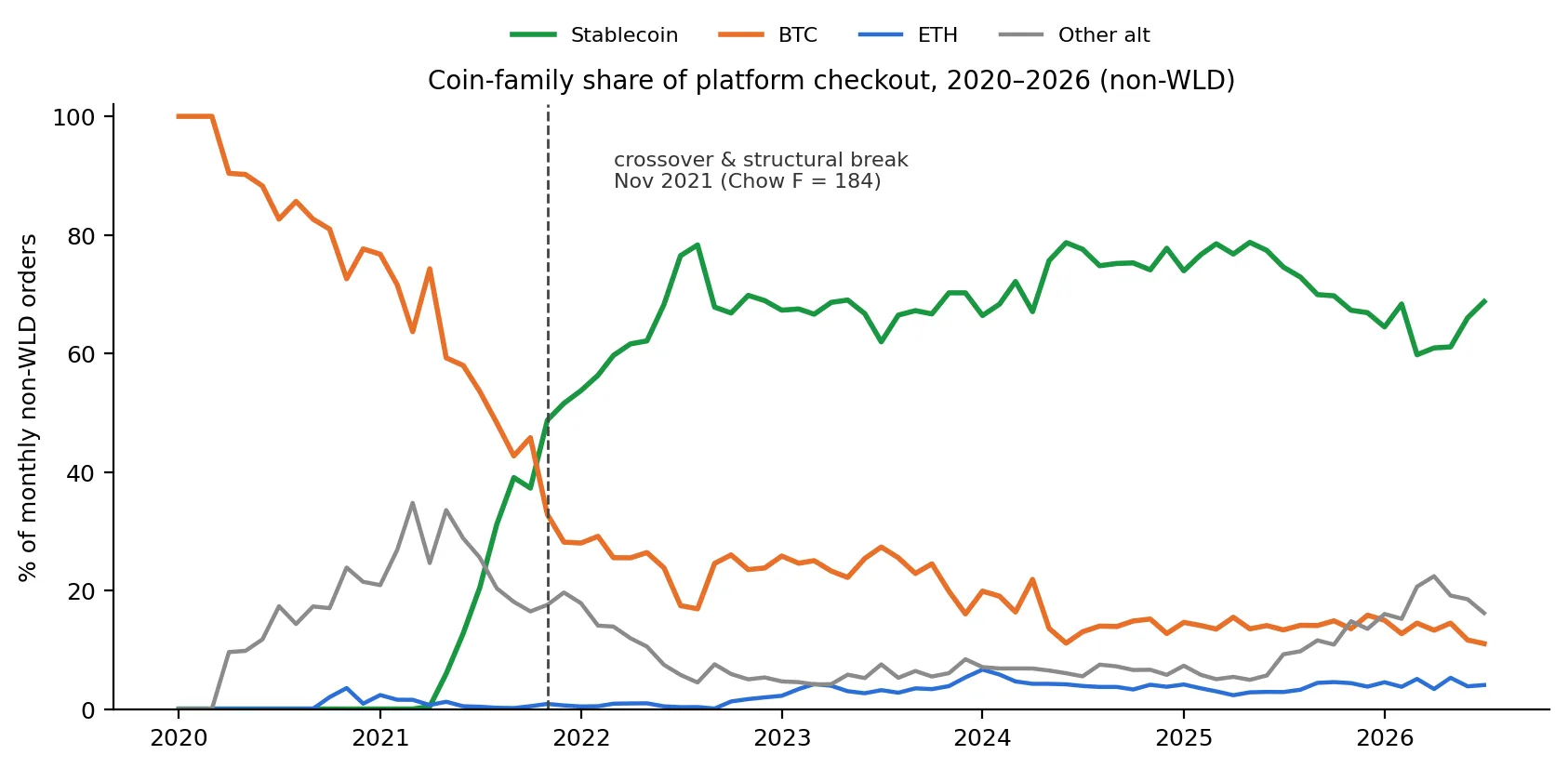
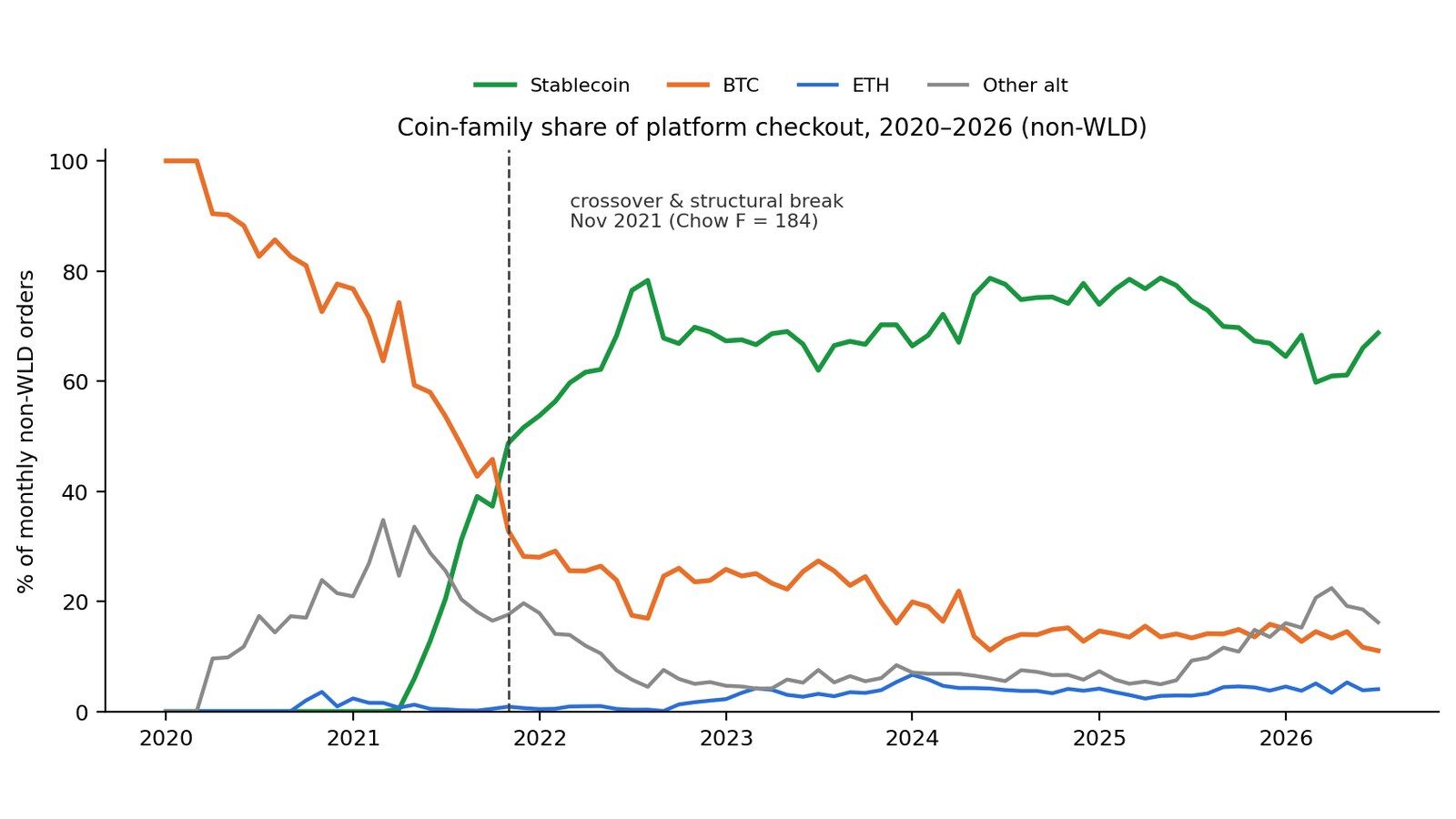
Checkout was essentially all Bitcoin in 2020. Today roughly two thirds of everything sold on the platform is paid for in stablecoins, and the crossover dates to November 2021, the month the last bull market peaked.

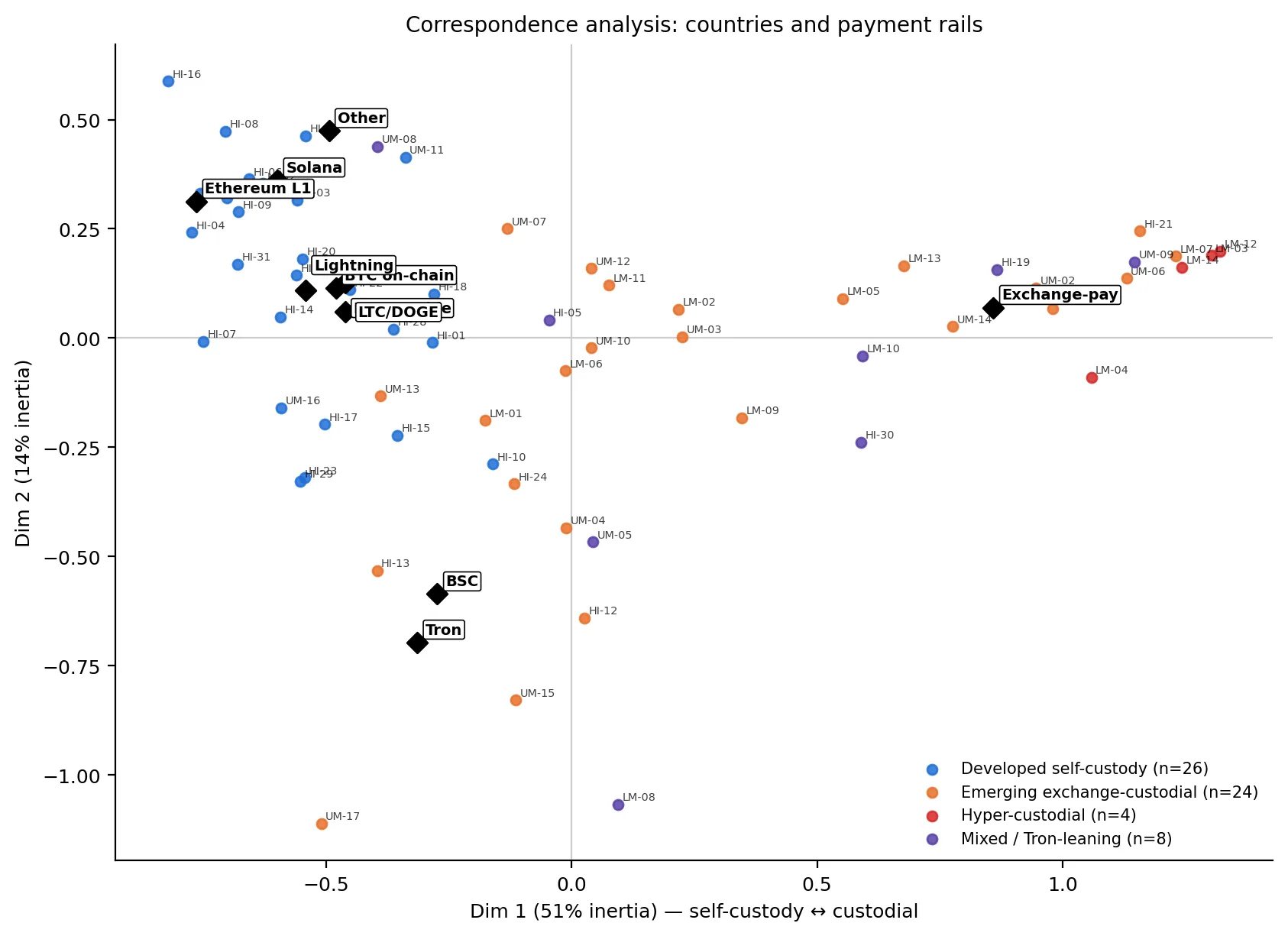
Custodial exchange payments average 64 per cent of checkout in lower-middle-income countries and 19 per cent in high-income countries. Tron, the supposed emerging-market rail, shows no income gradient at all.

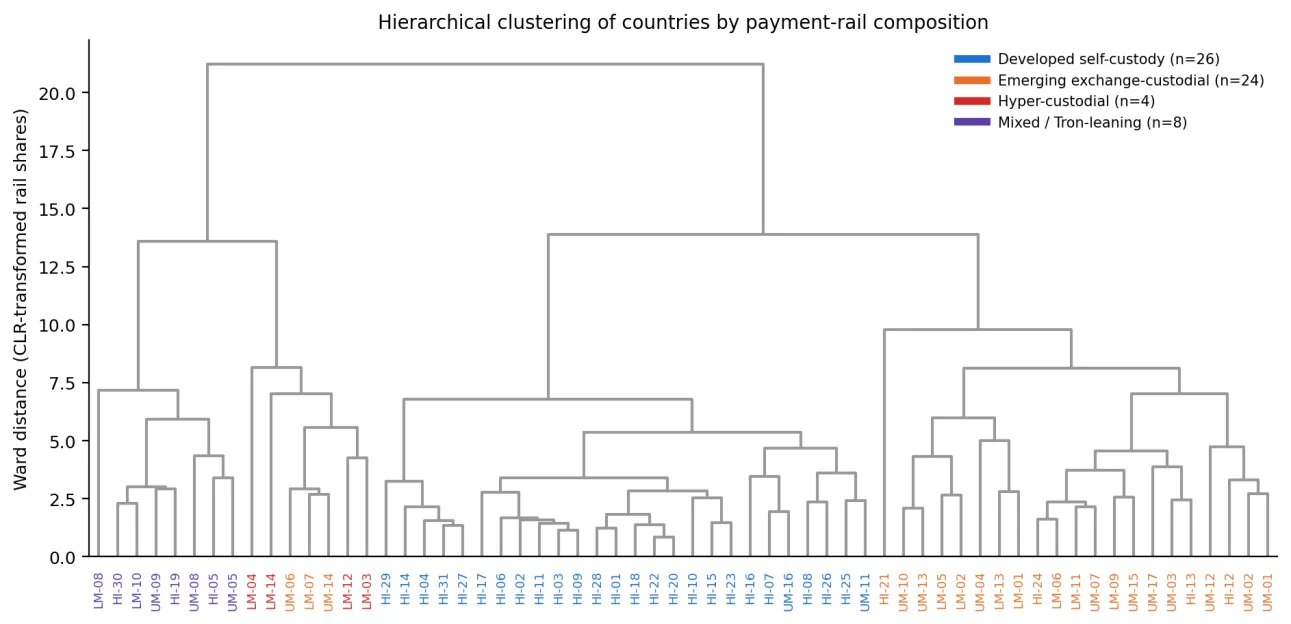
Clustering countries by payment-rail mix yields four regimes, from developed self-custody economies to a small hyper-custodial group that settles around 95 per cent of checkout through exchanges.
Silenzi, M. (2026). The Geography of Real-World Crypto Spending: Evidence from a Global Crypto-Commerce Platform Across 62 Countries. Cryptorefills Labs Working Papers, No. 1. doi:10.5281/zenodo.22641350
Not survey data alone. Cryptorefills Labs combines surveys of people who pay with crypto with real purchase data from the Cryptorefills platform going back to 2018.
Crypto shoppers surveyed
Countries
Years of transaction data
Charts and graphs

Cryptorefills Labs has published the first paper in its new Working Papers series, an analysis of completed crypto purchases across 62 countries. The findings unsettle some of the industry's favourite stories.
Read the article
A peer-reviewed study revealing who crypto-shoppers are, how they use cryptocurrency for purchases, and what really drives their spending behaviour.
Read the article
Research showing why stablecoins are becoming the preferred payment method for everyday crypto commerce, driven by stability, lower costs, and greater convenience.
Read the articleNew data on how people actually pay with stablecoins and crypto, straight from our own transaction research. No more than one email a month, and you can unsubscribe with one click.

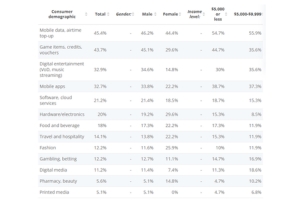
Most popular goods and services bought by consumers worldwide when using cryptocurrencies for online shopping in 2022, by gender and income group
See the data on Statista→
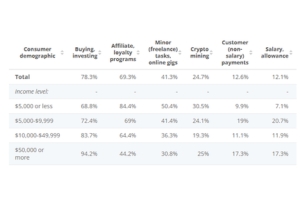
Most popular ways for consumers worldwide to obtain cryptocurrencies in 2022, by income group
See the data on Statista→
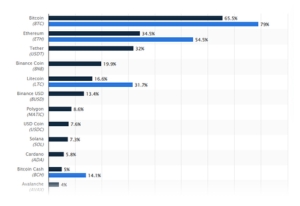
Cryptocurrencies and stablecoins that are owned the most by consumers worldwide who shop online in 2021 and 2022
See the data on Statista→
“The majority of stablecoin payments are dispersed fairly evenly across alternative networks like Polygon, TRON, Solana, and Avalanche as well as Ethereum layer-2s like Optimism and Arbitrum,” said Silenzi. “As a result, when it comes to stablecoin payment networks that are quick, inexpensive, and scalable, there isn’t yet a clear winner.”

“We see increased demand for crypto payments and there are many customers from all corners of the earth that for very different reasons are demanding a wider acceptance of crypto payments. We see this also in the increased frequency with which crypto shoppers spend their crypto (83.4% spend crypto at least on a monthly basis, 39% on a weekly basis).”

“According to a recent report from Chinalysis, an established Blockchain data platform from Singapore, global cryptocurrency adoption swelled by 880% in the last year. In Q2 of 2020, it stood at 2.5, but 365-days later, it was at 24, with data suggesting that it has notched a rise of 2,300% in less than two years.”

“For these users – freelancers paid in digital currencies, families sending cross-border remittances, or communities grappling with high inflation – crypto is a lifeline. It offers low fees, seamless global transfers, and a way to maintain purchasing power when local currencies are in flux.”

“The data seems to paint the picture of a user whose crypto adoption is forced by external economic issues, such as lack of access to banking services and other payment options, or the economic instability in their countries. According to the survey, crypto consumers in this group come from developing economies and tend to be self-employed. Many of them receive crypto as payment for their services — ranging from coding tasks to writing blog posts — and they spend crypto because of the necessity, with about half of the respondents unable to cash out their crypto holdings.”

“As another opportunity for retailers, cryptocurrency shoppers are a crowd with underserved demands in this field, with 40.5 per cent of respondents of CryptoRefills‘ research indicating the lack of merchants and brands that accept crypto as their top problem in 2022. That said, as part of a major global trend, most enterprises are looking forward to accepting crypto from their customers in the future.”
Research partners
Our research partners help us reach consumers, share data and review our findings. Institutions, industry associations, payment businesses and media partners contribute to every edition of the Consumer Report, and together they make the picture of crypto payments adoption a global one.


